

Overview
We will be celebrating the Chinese New Year at the end of January this year. Until then, youths like us eagerly await receiving our hong baos — red packets with freshly printed money inside — while aunties and uncles form snaking queues at ATMs and banks in search of those crisp notes to hand out. In Chinese culture, these newly minted notes are used to wish recipients a fresh start in the New Year, as explained by Low (2023).
However, the new notes and ang baos have presented a rather challenging question in the wake of climate change: are they necessary?
It is indeed a delicate affair to balance both the needs of the planet and celebrating this time-honoured tradition. So, let us, the team at Beyond the Buy, help you find that golden balance by injecting a little green into your new year.
The Cost of Money
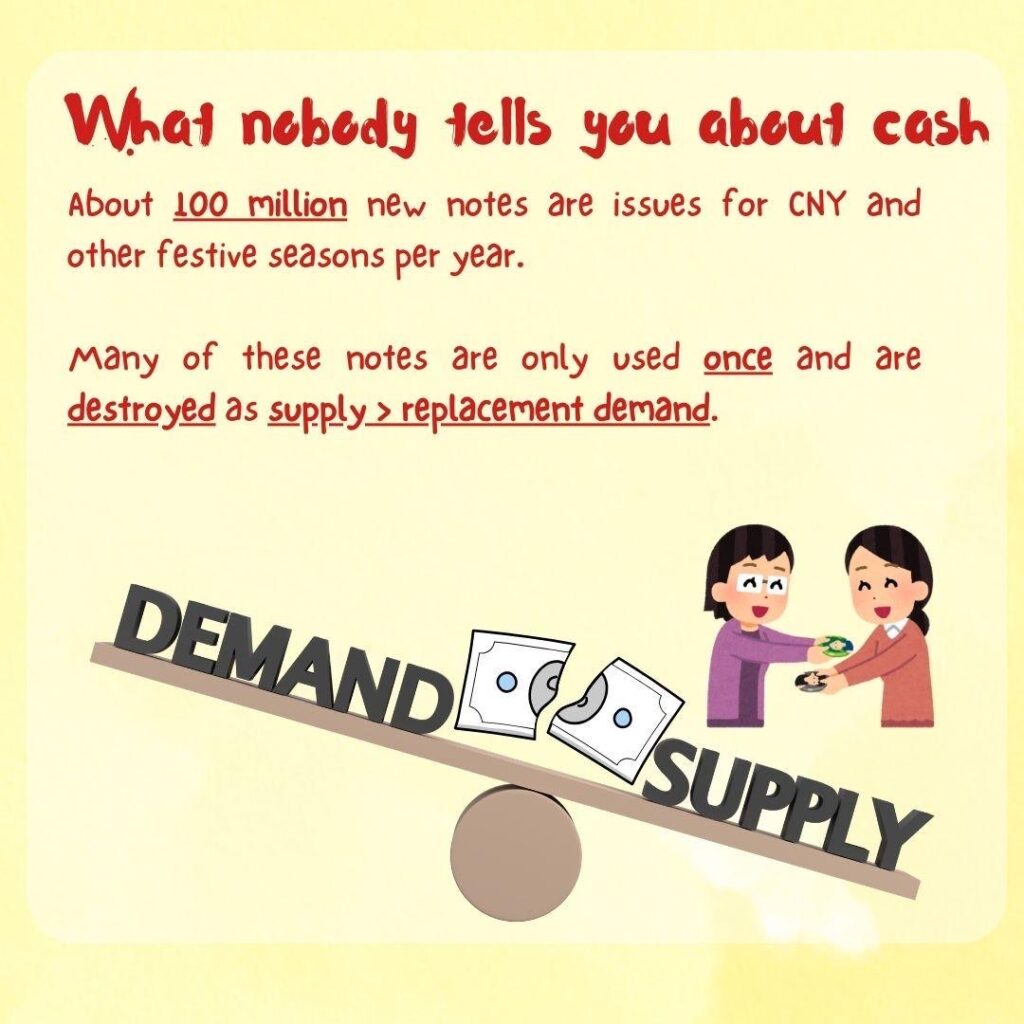
The price of new notes far exceeds their monetary value when considering their environmental impact. To meet the surging demand for freshly printed currency during festive periods, such as the Chinese New Year, the Monetary Authority of Singapore produces upwards of 100 million new pieces of notes each year for gifting, as reported by Tan (2022). Most of these notes do not stay in circulation for long and are returned to MAS shortly after the festive season, resulting in an accumulation of practically brand-new notes that are prematurely destroyed.
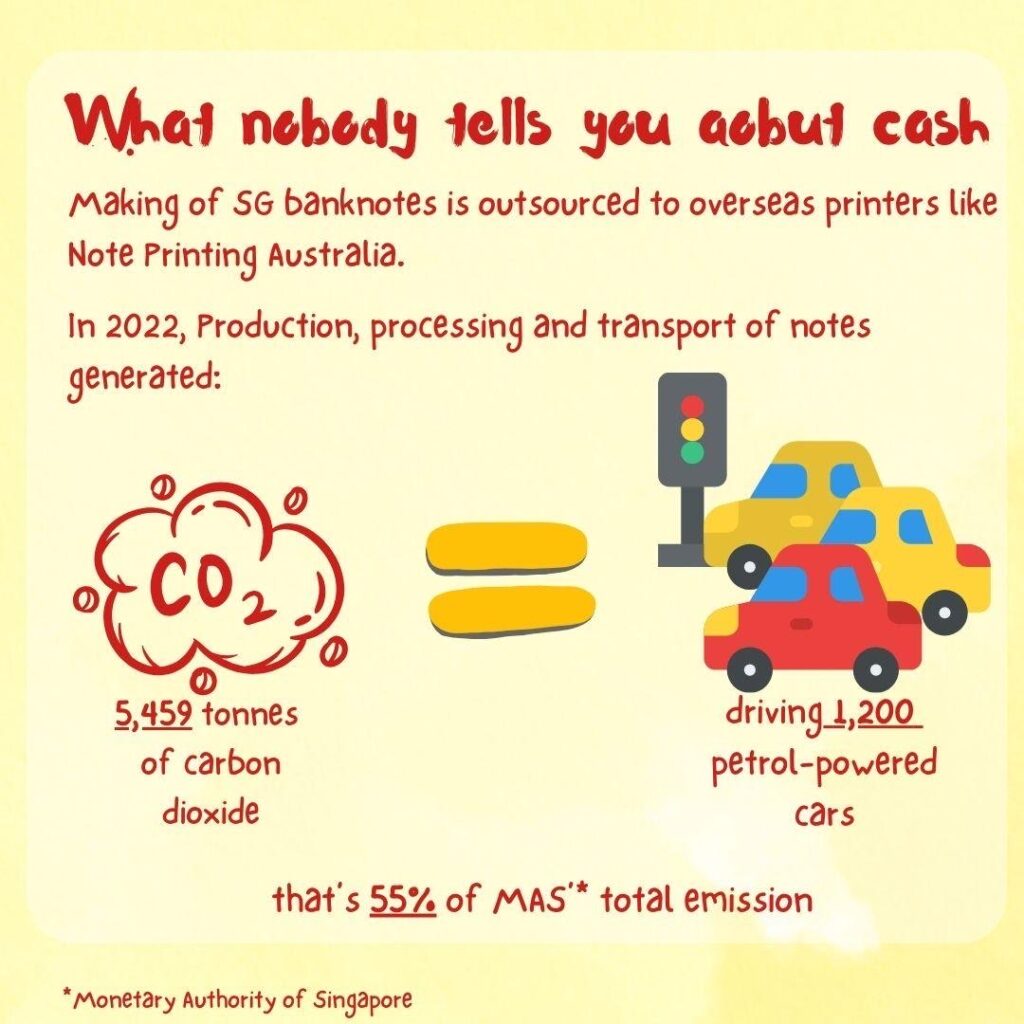
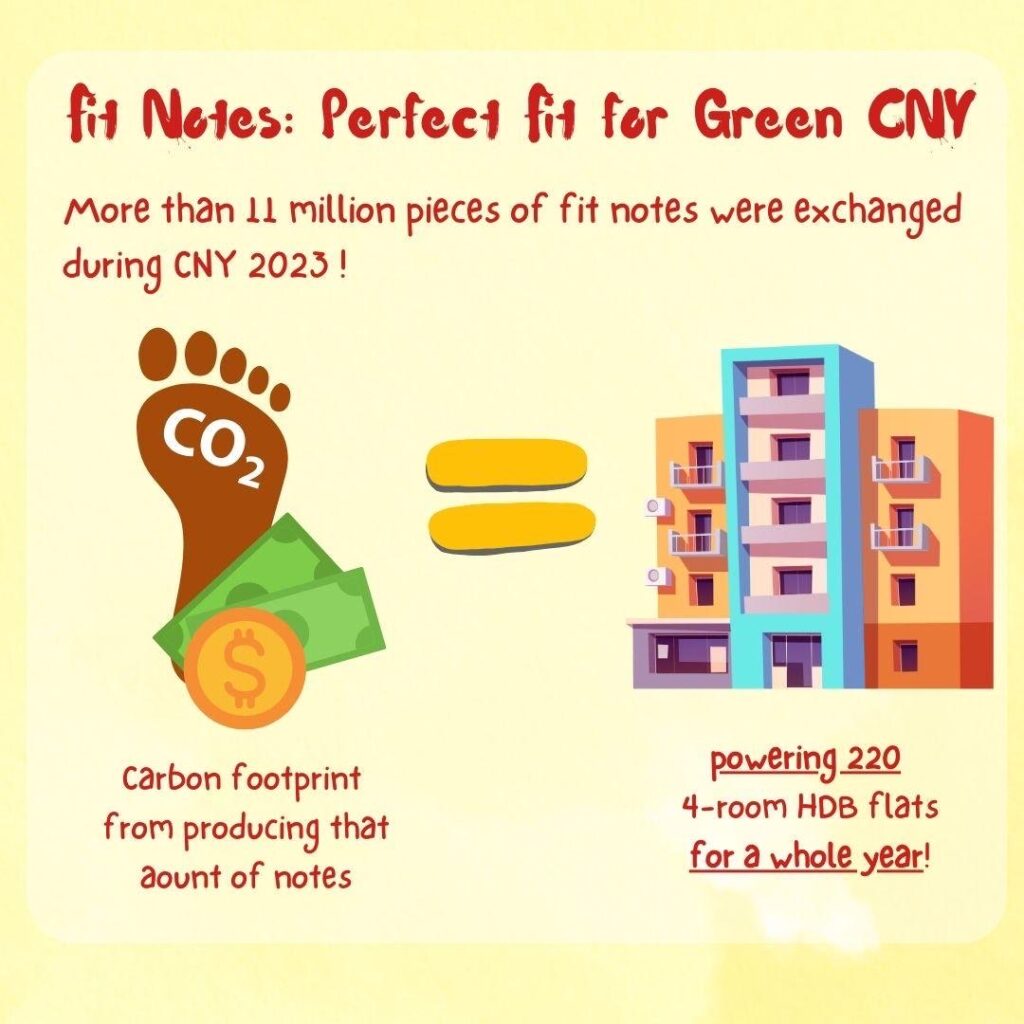
According to MAS (2022), the printing and processing of these new notes accounted for approximately 8 percent of the authority’s total annual carbon emissions. This is equivalent to the energy needed to power 430 four-room HDB flats for a year, or the equivalent of planting 10,000 trees to offset the resulting carbon footprint.
Fit Notes
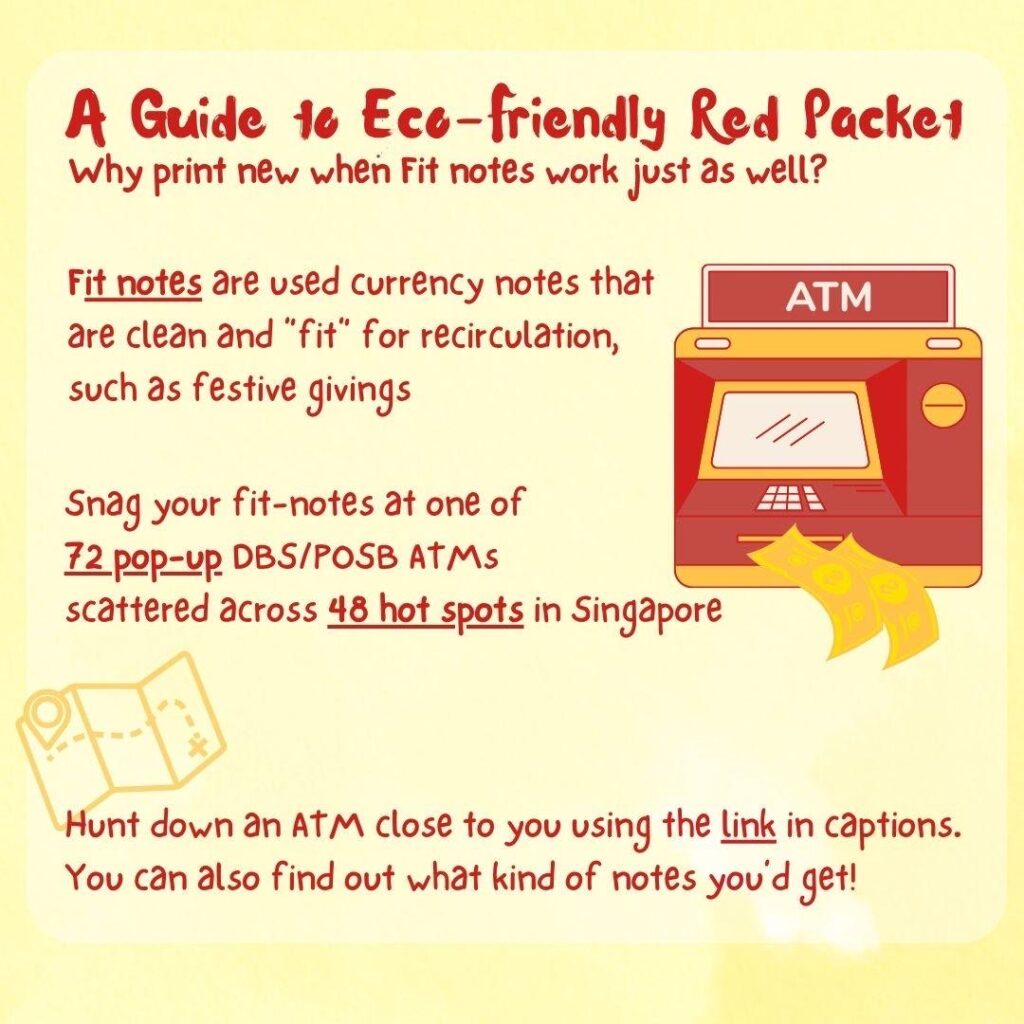
The same year, MAS issued a statement encouraging the public to choose greener alternatives for the 2023 festivities through the use of “Fit-for-Gifting” currency notes, also known as Fit notes.
Fit notes are, as their name suggests, in suitable condition for recirculation, and are fit for festive gifting. MAS highlighted that the aesthetics of the fit notes have been assessed and verified by banknote processing machines and possess comparable quality to notes issued by automated teller machines (ATMs)
Effectiveness of Fit Notes
MAS’s efforts to promote the use of Fit notes have paid off significantly in terms of reducing the festivities’ carbon footprint. Carbon emissions around the festive period in 2024 were reduced by approximately 408 tonnes compared to previous years.
In 2024, two-thirds of gong baos surveyed contained Fit notes instead of new ones. This was supplied by the 11.7 million pieces of Fit notes exchanged at DBS, OCBC, and UOB banks.
MAS emphasized that the use of Fit notes is set to rise as the continued efforts of government agencies encourage the public to adopt greener practices for subsequent festive gifting.
The Cost of Ang Baos
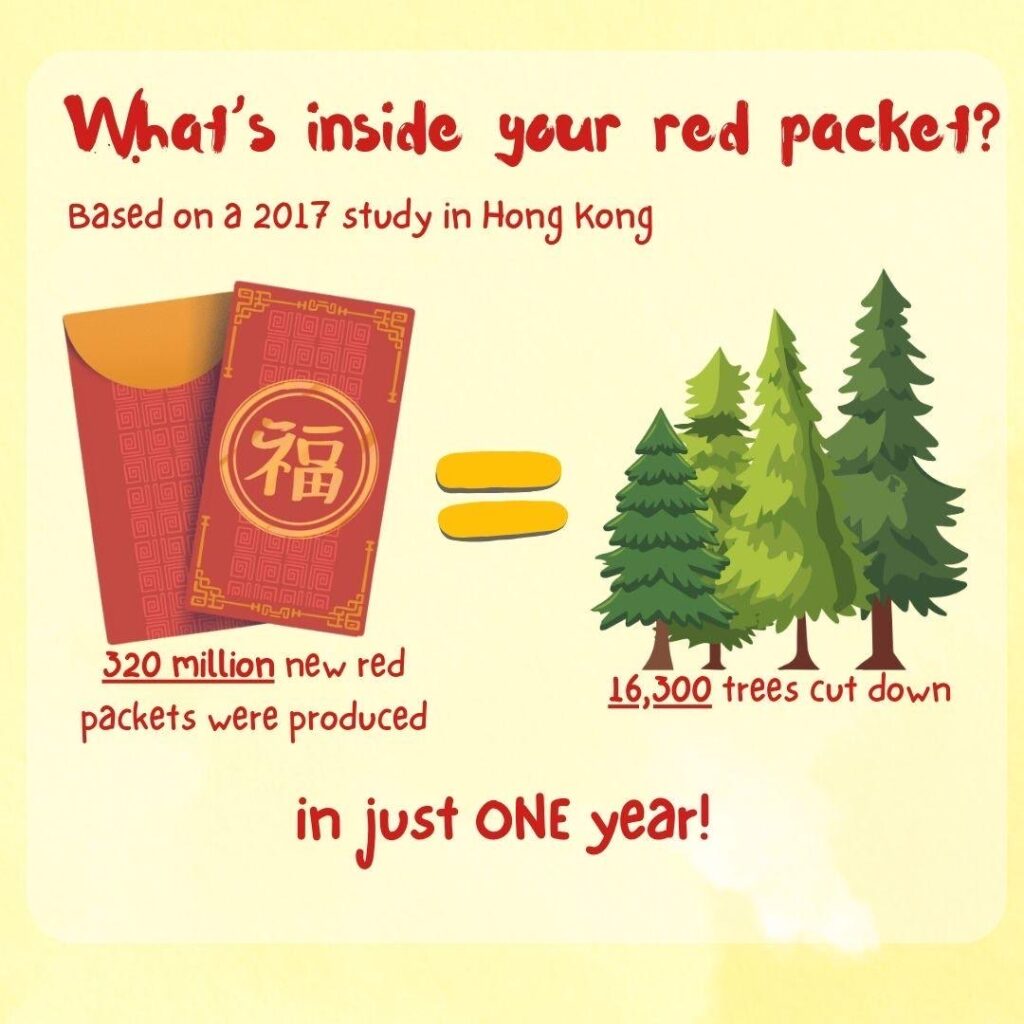
Each year before CNY, businesses and organizations across the island will print tens of millions of hong baos in various designs to give to their customers. Although the Singapore Environment Council is unable to provide statistics specific to Singapore, the council noted that according to a 2017 study, 320 million new red packets are produced in Hong Kong each year, which translates to about 16,300 trees being cut down every year, as Ang reported.
Like the new notes, these ang baos, especially those with specific zodiac designs, have a particularly short lifespan, as most people will not reuse them.
Recycling Ang Baos
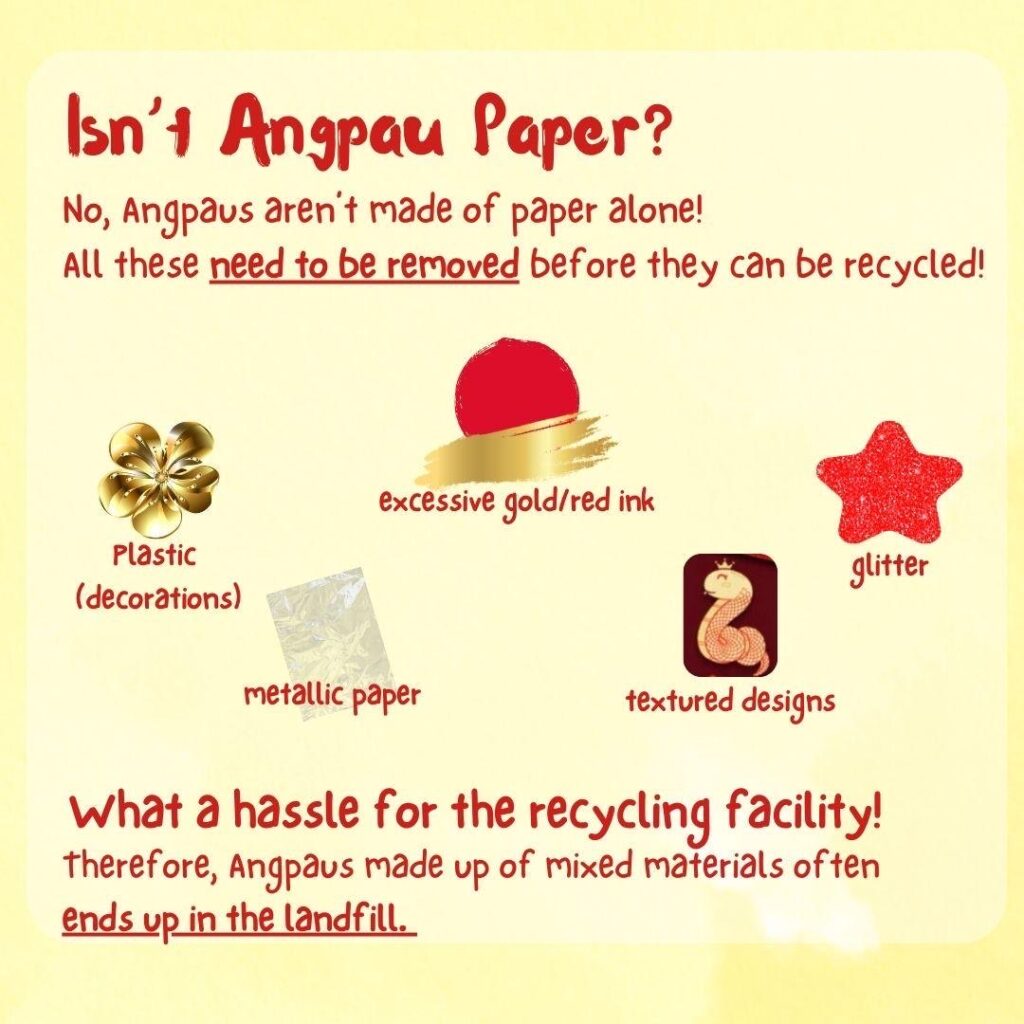
In recent years, recycling ang baos have been a rising trend, with banks such as DBS at the forefront of the green movement. Since 2021, DBS has collected 14,899 kilograms of ang baos. These are then sent to Tay Paper, where they are processed into new cupboard boxes (DBS.com, 2023). However, Ang also mentioned, up to 30 percent cannot be recycled as they are printed with too much glitter or are not made of paper.
Our need for novelty in the practice of hong baos could perhaps be veered towards a greener alternative.
Although there has been considerable effort to reduce unnecessary ang bao waste, a considerable amount of ang baos still slip through the cracks and end up in landfills or incinerators.
E- Hong Baos
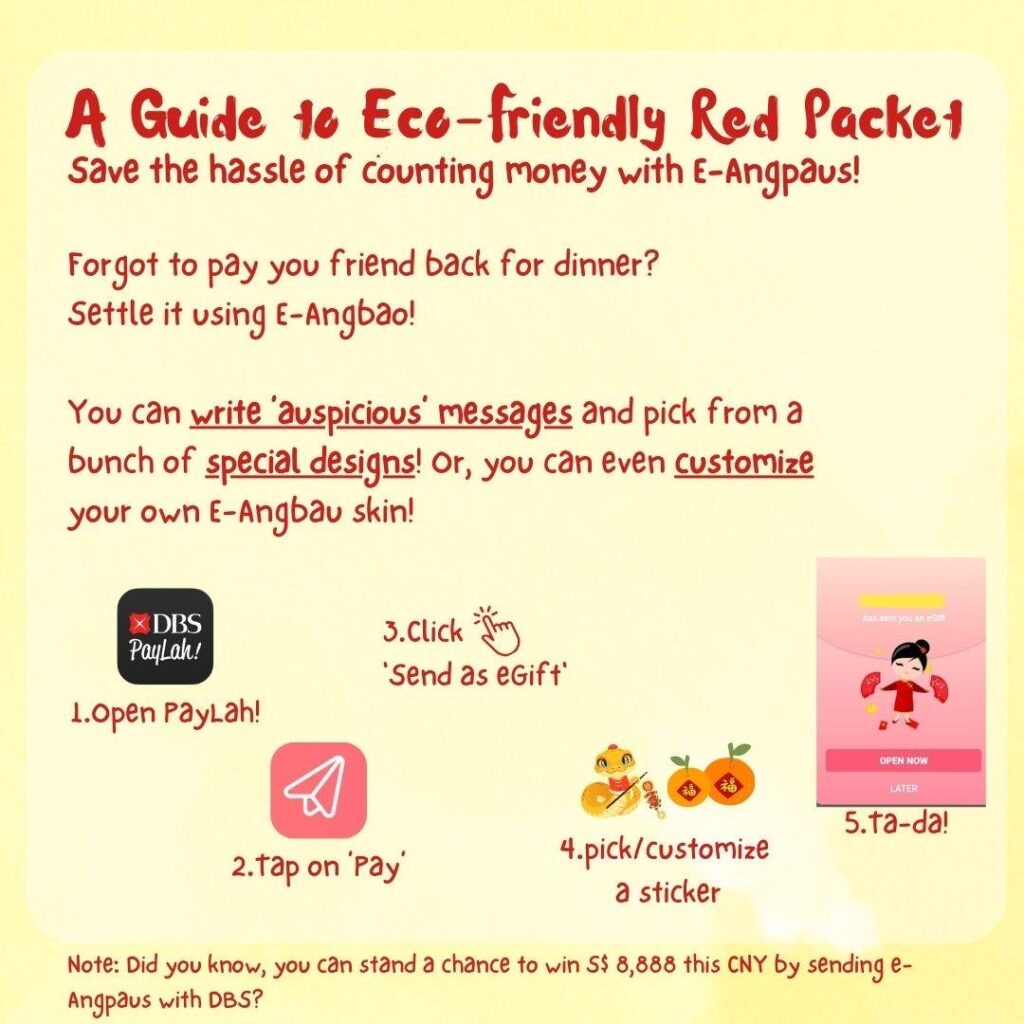
As more financial services are moving online, digital hong baos have become an increasingly popular way to give hong baos during CNY. Last year, DBS reported that more than $17.5 million was transferred using its QR Ang Bao and eGift features during the festive season. According to China, this represents a 30 percent increase from previous years.
While the more environmentally friendly digital gifting method is less aesthetically pleasing than a bright red packet, there are several advantages to both the giver and the recipient:
- Counting cash: just key in the amount you wish to give
- Convenience: you don’t have to queue up at banks or ATMs for Fit or new notes
- Environmental Friendliness
BTB’s solutions
This Chinese New Year, bring a little green into this red season with some of these conscious tips:
- Use Fit notes or digital ang baos instead of traditional red packets
- Recycle all your used or unused red packets
For the full post, head over to our Instagram page ! 🚀
Don’t forget to like, comment, and share for more behind-the-scenes insights into the items we use every day. 🌍 Stay tuned for more engaging content that breaks down the world around us—one post at a time! 📲✨